

The last mile is a real challenge for delivery and service companies.
This final stage, from the distribution center to the customer, concentrates a significant share of costs and operational challenges.
Faced with the explosion of e-commerce and growing customer expectations in terms of speed and flexibility, route optimization becomes an essential lever for gaining efficiency and profitability.
Let’s look together at how this innovative approach, based on advanced algorithms and artificial intelligence, is revolutionizing delivery and service route management.
Concrete gains from optimization on last mile costs and productivity
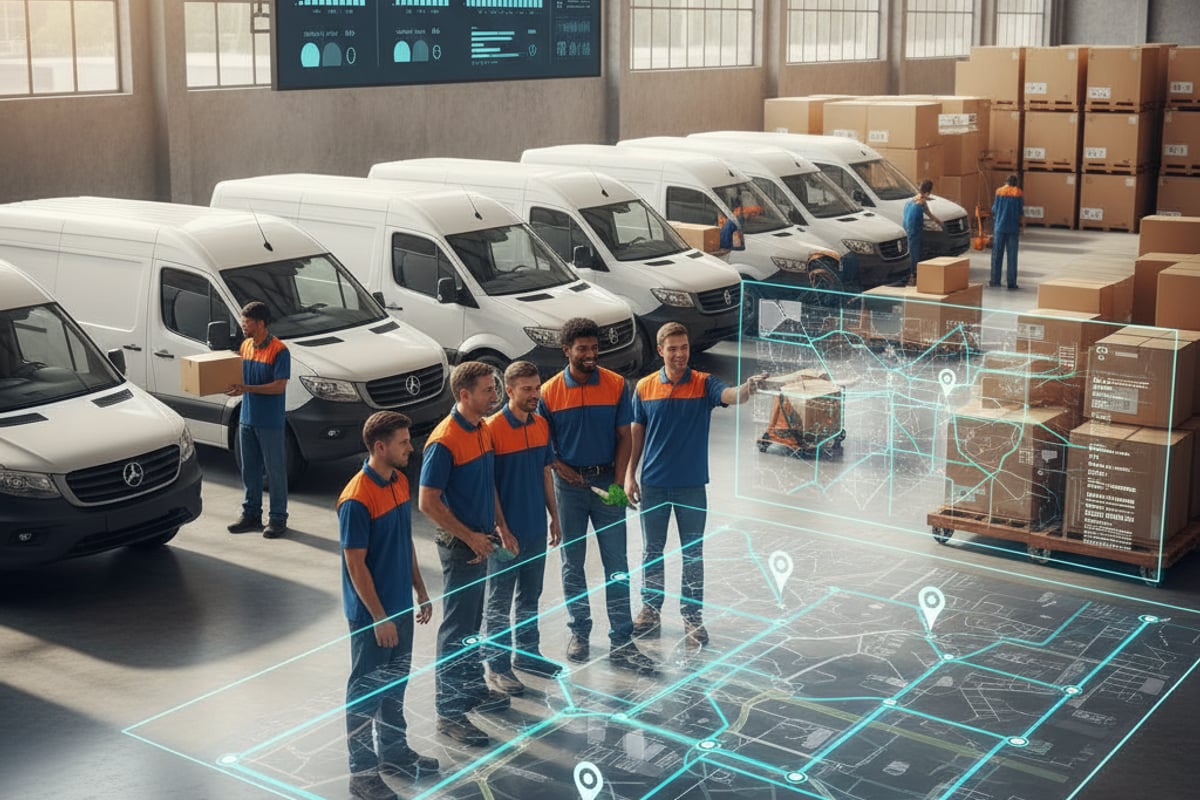
A measurable reduction in kilometers traveled and operational costs
Route optimization reduces the distances traveled by your vehicles. By using sophisticated algorithms to plan the shortest and most efficient routes, you can save up to 30% on your kilometers.
This reduction directly translates into lower operational costs. Fewer kilometers means less fuel consumed, less vehicle wear, and less working time for your drivers.
A clear increase in the number of deliveries per vehicle per day
By optimizing the order and assignment of delivery points, you maximize the utilization of your fleet. Each vehicle can thus complete more deliveries in its day, without compromising service quality.
Optimization can increase the number of deliveries per day per vehicle by 25% on average. This productivity gain allows you to meet growing demand without necessarily investing in new vehicles or hiring more staff.
A positive environmental impact with reduced CO2 emissions
By reducing kilometers traveled, optimization also helps decrease the carbon footprint of your delivery activities. Fewer kilometers means less fuel burned and therefore fewer CO2 emissions.
Logistics optimization can reduce CO2 emissions by 10 to 20%. This environmental performance is a strong argument for your customers who are increasingly sensitive to the ecological impact of deliveries.
Technologies and algorithms revolutionizing route planning
Vehicle Routing Problem (VRP) solving algorithms
At the heart of optimization lies the Vehicle Routing Problem (VRP). This is a complex combinatorial optimization problem that aims to determine optimal routes for a fleet of vehicles that must visit a set of delivery points.
Advanced algorithms, such as those used by the Google Route Optimization API, can solve this problem in seconds, even for hundreds of delivery points. They take into account multiple constraints such as vehicle capacity, time windows, customer priorities, and real-time traffic.
Artificial intelligence for predicting delivery times in real time
Artificial intelligence and machine learning play a key role in route optimization. By analyzing vast datasets (delivery histories, GPS data, traffic, etc.), these technologies can accurately predict delivery times.
The “predict-then-optimize” approach based on machine learning reduces prediction errors compared to traditional methods. This precision is key to planning realistic routes and keeping promises made to customers.
Optimization tools and their key features for field teams
To implement route optimization, dedicated tools exist on the market. Among the most popular, we can mention:
- MapFlow: this comprehensive platform offers advanced features such as taking into account technician skills, absence management, and digitalization of work orders.
- Google Route Optimization API: this powerful API allows you to integrate route optimization into your own IT systems.
Best practices for successfully transforming your delivery operations
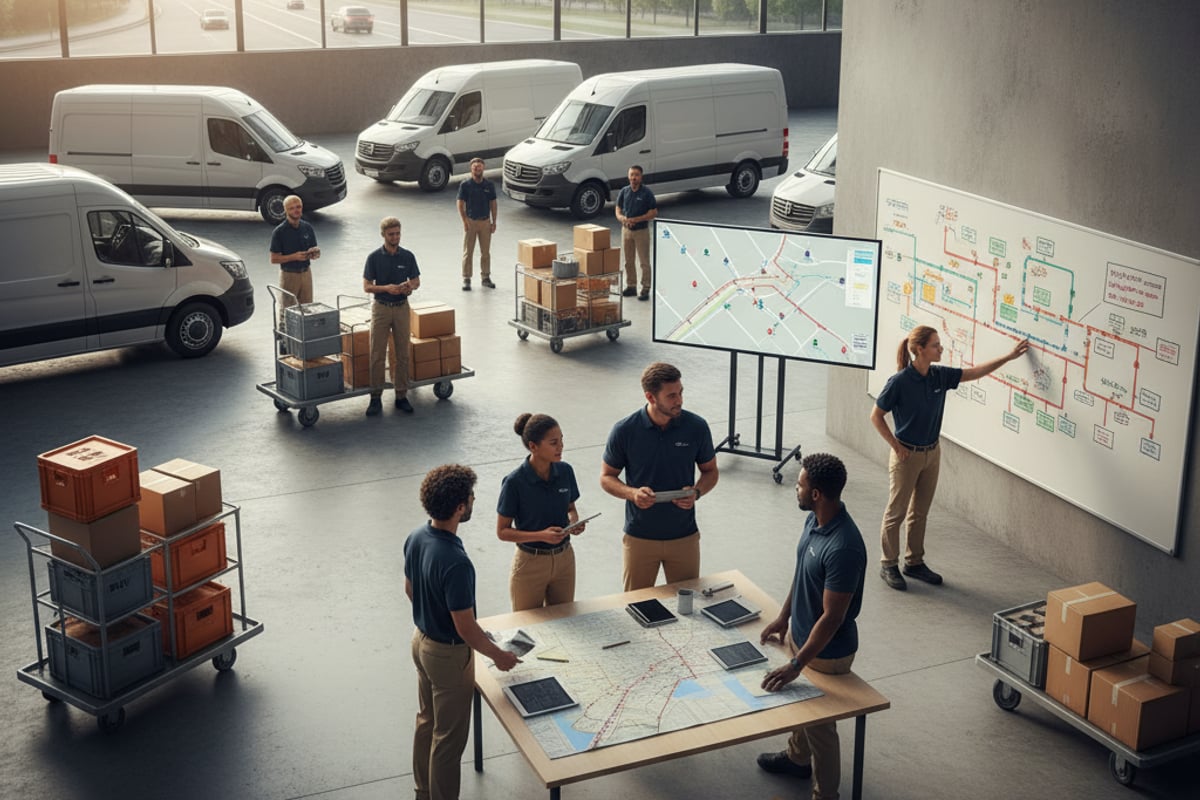
Collecting and leveraging field data for effective optimization
To get the most out of route optimization, data quality is fundamental. Make sure to collect and centralize all relevant information:
| Data Type | Examples | Usefulness for Optimization |
|---|---|---|
| Customer data | Addresses, delivery constraints, order history | Plan routes adapted to customer needs and preferences |
| Vehicle data | Vehicle types, capacities, fuel consumption | Allocate resources optimally and track costs |
| Driver/technician data | Availability, skills, working hours | Plan realistic and regulation-compliant routes |
| Field data | Actual travel times, incidents, customer feedback | Refine predictive models and adjust routes in real time |
Leverage this data to feed your optimization algorithms and obtain increasingly precise and relevant results.
Progressive integration of optimization solutions into your existing processes
Adopting a route optimization tool is a significant change in your working methods. To succeed in this transition, favor a progressive approach:
- Start with a pilot on a limited scope (one geographic area, part of your fleet) to validate the benefits and adjust parameters.
- Train your teams on using the tool and support them in changing their habits.
- Integrate the solution into your existing information system (ERP, CRM, WMS) to streamline data exchanges and automate processes.
- Gradually deploy optimization across all your operations, building on the feedback from the pilot.
This iterative approach allows you to control risks, build maturity on the subject, and maximize buy-in from your team members.
Tracking performance indicators to measure return on investment
To demonstrate the value of route optimization, the key lies in tracking the right performance indicators. Set up a dashboard that allows you to measure:
- The evolution of transport costs (fuel, vehicle maintenance, overtime)
- The number of deliveries or interventions completed per day per vehicle
- The rate of compliance with time slots and delivery deadlines
- Your field team productivity (time spent on deliveries vs. non-productive time)
- Customer satisfaction (complaint rate, NPS)
Share these results with all stakeholders to highlight the gains achieved and maintain the momentum of continuous improvement. Do not hesitate to also communicate about less tangible benefits such as improved working conditions for your teams or the reduction of your carbon footprint.


