

Artificial intelligence reaches a new milestone in video content creation with Sora 2, the latest innovation from OpenAI.
Launched in late September 2025, this improved version of Sora is a major advance in generating realistic and immersive videos.
Let’s explore together how this revolutionary technology is transforming the way we create and share visual content, while raising important ethical questions.
3 Stunning Examples of Sora 2 Videos
Giant Duck Race
The Quack: Part 1 by Sora 2. pic.twitter.com/kFTWwrX6Yl
— OpenAI (@OpenAI) October 3, 2025
Mario in a Police Chase
Sora 2 Remix → Mario's Escape.
— Rory Flynn (@Ror_Fly) October 3, 2025
The remix feature is underrated.
PROCESS:
1. Generate an intial video
2. Post it.
3. Select Remix.
4. Describe next scene / repeat.
Initial Prompt:
Realistic body cam footage of a police officer pulling over Super Mario in his mario cart. It was… pic.twitter.com/Sn3VwuiGSM
Manga Anime Style Animation
Sora 2 is too good with animation!
— Jer at EccentrismArt (@EccentrismArt) October 9, 2025
And it’s fun to change the shots exact time code with prompting.
Prompt in comments: pic.twitter.com/xVnG2dGmKQ
The Revolutionary Capabilities of Sora 2
Improved Multimodal Video Generation
Sora 2 pushes the boundaries of AI-assisted video creation. You can now generate high-quality sequences from various types of inputs: text, existing images, or even by extending and remixing pre-existing videos.
The maximum duration of generated videos reaches 20 seconds, with an impressive resolution of 1080p (Full HD). This significant improvement over the first version of Sora allows creating longer and more detailed content.
Synchronized Audio and Realistic Sound Effects
One of the major innovations of Sora 2 is its ability to integrate sound effects and dialogues perfectly synchronized with visual movements. This feature, absent from the previous version, adds a new dimension of realism to generated videos.
Imagine scenes where characters speak naturally, accompanied by coherent ambient sound. This audio-visual synchronization paves the way for fascinating applications in the fields of cinema, advertising, and education.
Physical Accuracy and Enhanced Realism
Sora 2 stands out for its ability to accurately simulate the laws of physics. Unlike previous models that could distort reality to execute an instruction, Sora 2 better respects the constraints of the real world.
For example, if a basketball player misses their shot, the ball will bounce off the backboard instead of magically teleporting into the basket. This faithfulness to the laws of physics considerably strengthens the realism of generated videos.
| Feature | Sora 1 | Sora 2 |
|---|---|---|
| Maximum Duration | 10 seconds | 20 seconds |
| Resolution | 720p | 1080p |
| Synchronized Audio | No | Yes |
| Physical Accuracy | Limited | Advanced |
The Sora App, a New AI-Centric Social Network
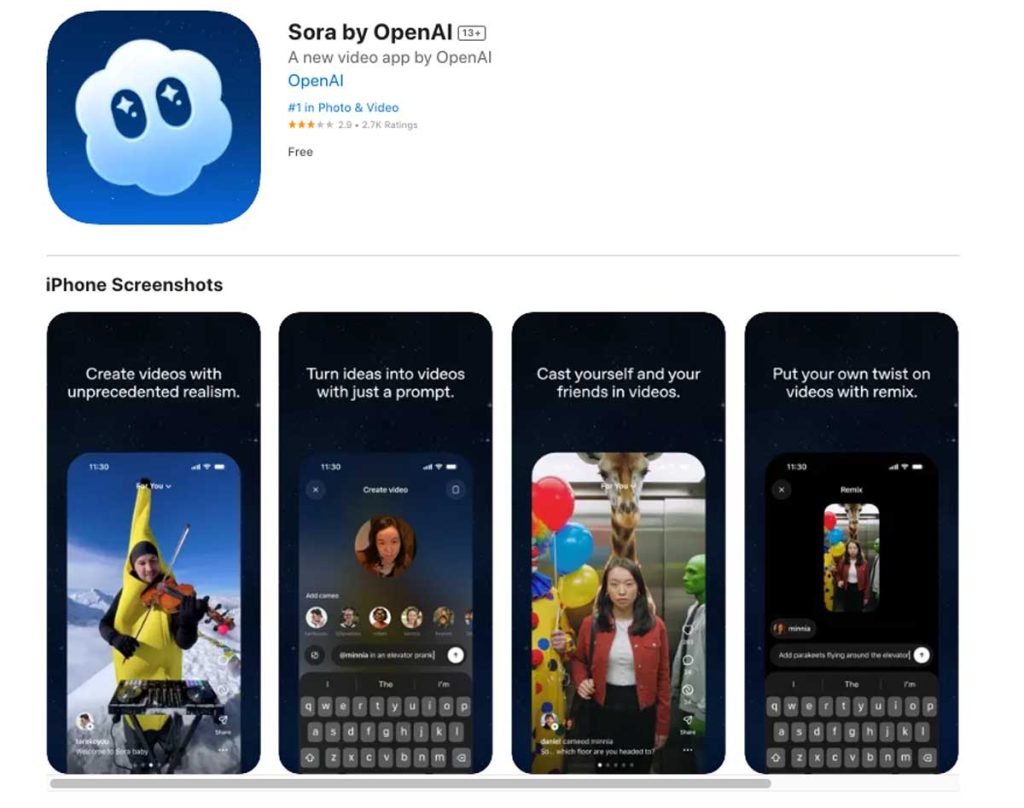
Cameos Feature to Insert Yourself into Videos
The Sora mobile app, launched alongside Sora 2, introduces a revolutionary feature called ‘Cameos.’ This option allows you to digitally insert yourself into AI-generated videos, creating an immersive and personalized experience.
After a short video and audio recording to capture your appearance and voice, you can integrate yourself into any scene created by Sora 2. This feature paves the way for new forms of creative expression and visual communication.
Integrated Creation and Sharing Tools
The Sora app does not just generate videos. It also offers a complete suite of tools to edit, customize, and share your creations. You can adjust generation parameters, add effects, and even combine multiple generated videos to create more complex narratives.
Sharing is done directly from the app to a dedicated social feed, thus creating a community of users passionate about AI-assisted video creation. This social integration transforms Sora 2 from a simple generation tool into a complete content creation and sharing platform.
Customizable Recommendation Algorithm
To avoid the classic pitfalls of social networks, such as compulsive scrolling or addiction, OpenAI has developed an innovative recommendation algorithm for the Sora app. Based on the company’s existing language models, this algorithm can be customized via natural language instructions.
You thus retain control over the content presented to you. By default, the algorithm favors videos created by people you follow or interact with, as well as those likely to inspire you for your own creations. The goal is to maximize creation rather than passive content consumption.
Ethical Issues and Safety Measures
Watermarking and Traceability of Generated Content
Faced with legitimate concerns about misinformation and misuse of AI-generated content, OpenAI has implemented robust safety measures. Each video created by Sora 2 is automatically marked with an invisible digital watermark undetectable to the naked eye but identifiable by specialized tools, in addition to a visible watermark. (see image below)

Additionally, provenance metadata is embedded in each video, allowing tracing its origin and creation history. These measures aim to ensure transparency and accountability in the use of this powerful technology.
Parental Controls and Teenager Protection
Aware of the potential risks for young users, OpenAI has integrated advanced parental control features into the Sora app. Parents can limit the number of videos teenagers can view daily in their feed, disable algorithm personalization, and manage direct messaging settings.
To reinforce these measures, OpenAI has also established teams of human moderators tasked with quickly examining cases of harassment or inappropriate content. These controls aim to create a safe and positive environment for all users, especially the youngest ones.
What Impact on Intellectual Property?
The arrival of Sora 2 raises important questions regarding intellectual property. Sam Altman, CEO of OpenAI, states that rights holders appreciate the creative diversions of their characters made with Sora 2. However, debates are emerging about the use of intellectual property without explicit authorization.
This issue echoes the challenges encountered by other content generation technologies, like Veo 3, which have had to navigate between innovation and copyright protection. It is likely that discussions and legal adjustments will be necessary to find a balance between creativity and protection of original creators.
| Ethical Issue | Solution Proposed by OpenAI |
|---|---|
| Misinformation | Watermarking and provenance metadata |
| Minor Protection | Parental controls and human moderation |
| Intellectual Property | Ongoing discussions with rights holders |
| Social Network Addiction | Customizable algorithm and viewing limits |


