
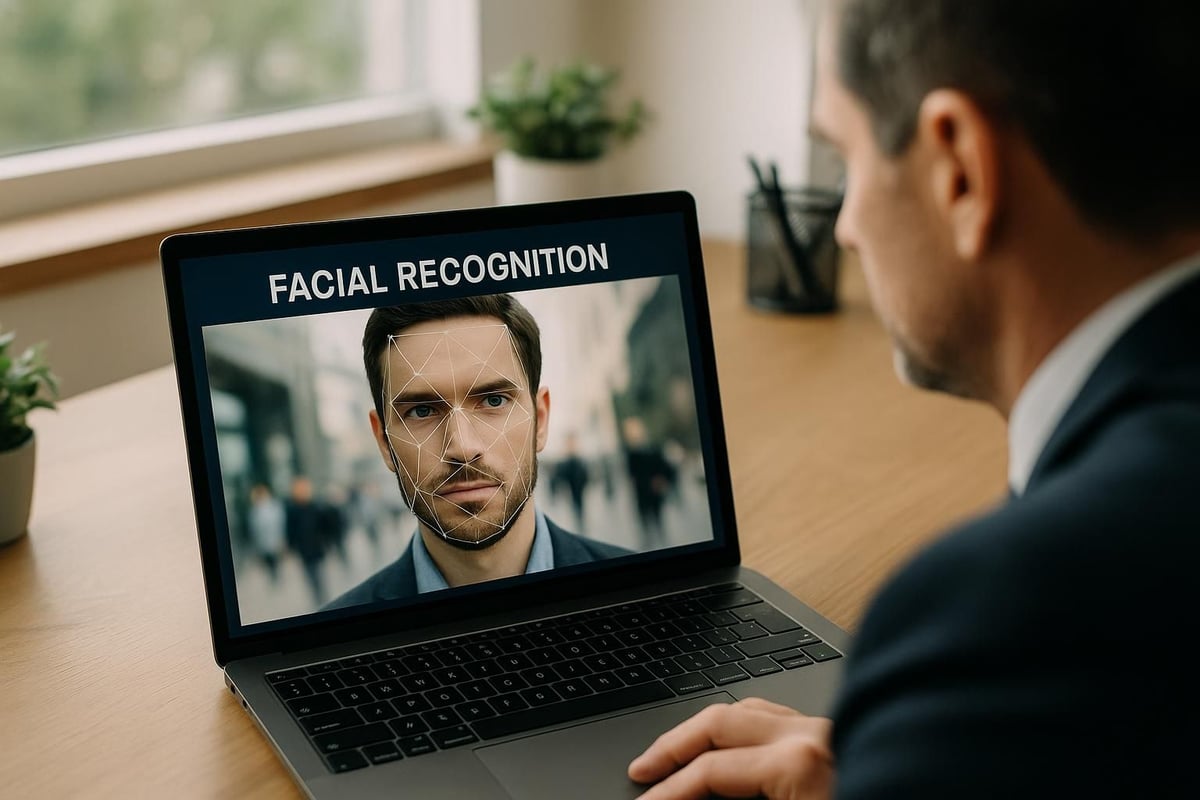
Facial recognition technology raises many ethical and practical questions in our digital society.
PimEyes, a search engine based on this technology, positions itself as a solution for monitoring your online identity.
But is this controversial tool really worth it? What are its advantages and limitations?
PimEyes: high-performing facial recognition but with significant limitations

High accuracy even on low-quality images
PimEyes stands out for its ability to identify faces with high precision, even from poor-quality photos. The artificial intelligence algorithm used manages to recognize facial features despite difficult lighting conditions or unfavorable angles.
This impressive performance allows the tool to find matches where other systems would fail. According to tests, PimEyes displays a very high recognition rate on a sample of varied images.
The tool has several key features that explain its effectiveness among certain users.
- Facial recognition search: Simply upload a photo for PimEyes to scan the web for matches.
- Identity monitoring: An alert service notifies subscribers if new photos of them are published online.
- Removal assistance: The tool offers assistance for requesting the removal of unwanted images.
Limited coverage of the web and private platforms
Despite its technical prowess, PimEyes suffers from a major limitation: its database of indexed images remains restricted compared to the immensity of the web. The tool does not cover the entirety of websites, focusing primarily on public content.
Social networks and private platforms largely escape its scope. This partial coverage reduces the reach of searches and may miss relevant results.
Fast processing speed but sometimes incomplete results
PimEyes distinguishes itself by its speed of execution, providing results in just a few seconds. This responsiveness allows for smooth and efficient use of the tool. However, the tradeoff for this speed is sometimes a less thorough analysis of images.
Some users report incomplete results or occasional false positives. The tool prioritizes speed over total exhaustiveness.
| Criterion | Performance | Comment |
|---|---|---|
| Accuracy | High | Excellent even on low-quality images |
| Coverage | Limited | Primarily public content |
| Speed | Fast | Results in seconds |
A freemium business model with paid advanced features
Very limited free version with 3 searches per day
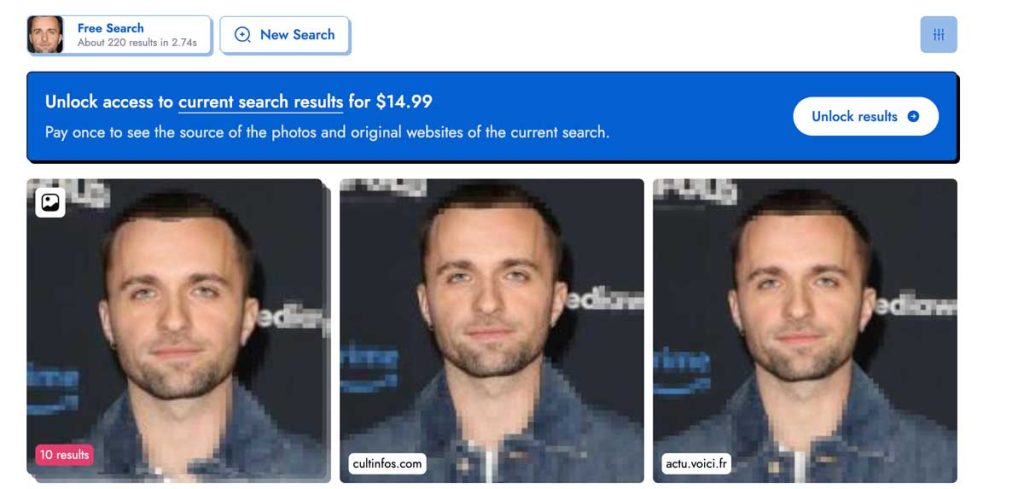
PimEyes is available in a free version for testing the tool, but with significant restrictions. Non-paying users are limited to 3 daily searches, which quickly becomes insufficient for regular use.
Additionally, the results displayed in the free version are partial, giving only a glimpse of the tool’s actual capabilities.
Premium subscriptions from 10 to 30 dollars per month
To access full features, PimEyes offers different paid subscription plans. The basic plan, at 10 dollars per month, includes unlimited searches and access to all results.
The most advanced subscription, at 30 dollars per month, includes additional options such as real-time alerts. These prices place PimEyes in a mid-range pricing tier compared to other similar services.
Exclusive features like alerts and image removal
Premium subscriptions give access to advanced features that are the true added value of PimEyes. The alert system notifies users as soon as a new image matching their face appears online, enabling proactive monitoring of their digital identity.
Assistance for removing unwanted images is another real advantage for those wanting to control their web presence.
| Plan | Monthly price | Main features |
|---|---|---|
| Free | $0 | 3 searches/day, limited results |
| Basic | $10 | Unlimited searches, full results |
| Premium | $30 | Alerts, image removal, priority support |
Major ethical and privacy concerns
Risks of malicious use for harassment and surveillance
The effectiveness of PimEyes raises legitimate concerns about its potential for misuse. Digital rights advocacy organizations warn about the harassment risks facilitated by this tool. A malicious individual could exploit PimEyes to track a person through their online appearances.
Non-consensual surveillance also becomes easier, opening the door to serious privacy violations. These ethical concerns highlight the need to protect your privacy when dealing with artificial intelligence technologies.
Lack of transparency on data collection and storage

PimEyes claims not to retain images uploaded by users, but ambiguity persists about its exact data practices. The company does not clearly communicate about the retention period of processed information or its potential use for other purposes.
This lack of transparency fuels distrust and raises questions about PimEyes’ compliance with personal data protection regulations.
Potential for abuse and questions about search traceability
Using PimEyes leaves digital traces whose exact nature remains unclear. Users legitimately wonder about the possibility that their searches are recorded and potentially exploited later.
The risk of the tool being diverted for profiling or mass surveillance purposes concerns defenders of individual liberties.
Available alternatives depending on your specific needs
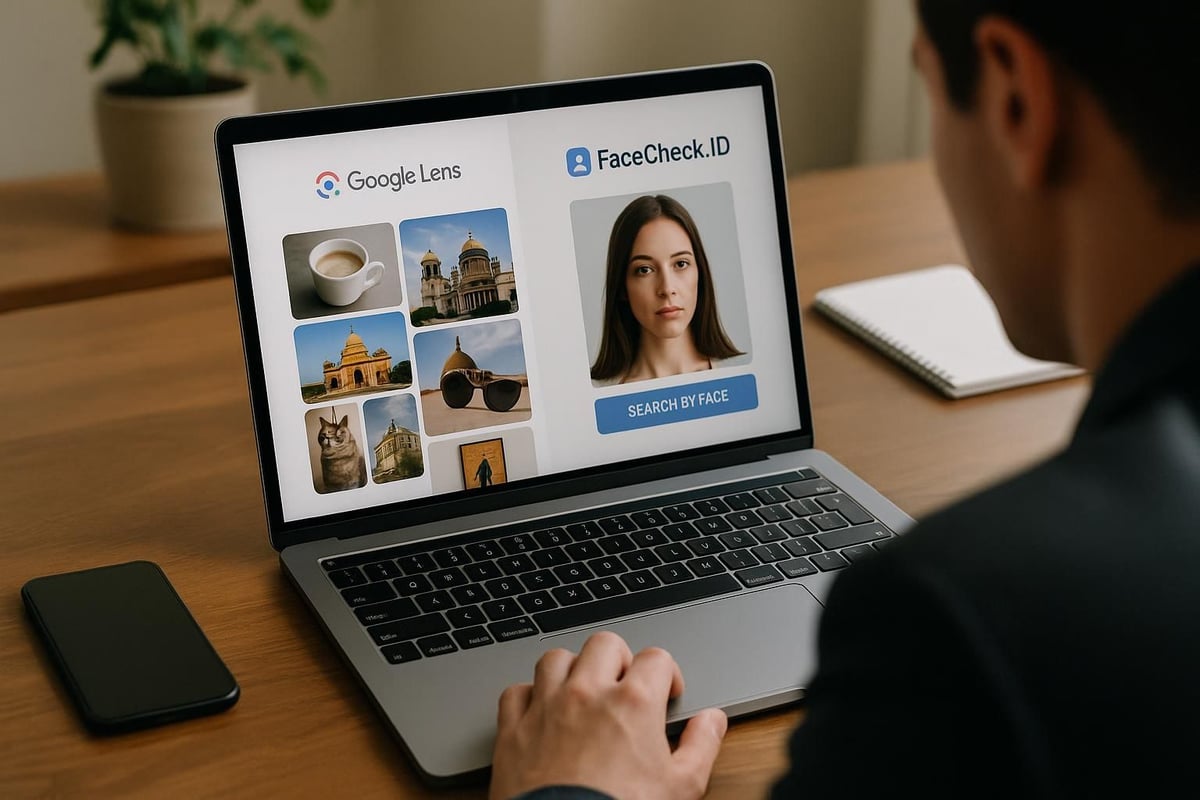
Google Lens for general reverse image search

Google Lens is a more generalist alternative to PimEyes. This Google tool allows an effective reverse image search, without focusing solely on faces. It offers broad web coverage and is particularly effective for identifying objects, places, or text in images.
Unlike PimEyes, Google Lens does not require a paid subscription to access its full features.
FaceCheck.ID as a direct competitor
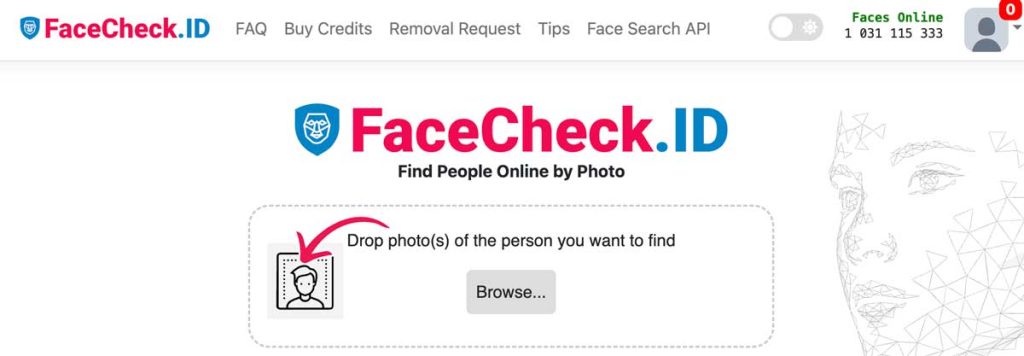
FaceCheck.ID is a direct competitor to PimEyes in the online facial recognition space. This tool offers similar features, with an emphasis on digital identity protection.
Its pricing is in the same range as PimEyes, but its interface is considered more intuitive by some users. FaceCheck.ID also emphasizes a more transparent privacy policy.
TinEye for image search without focus on faces
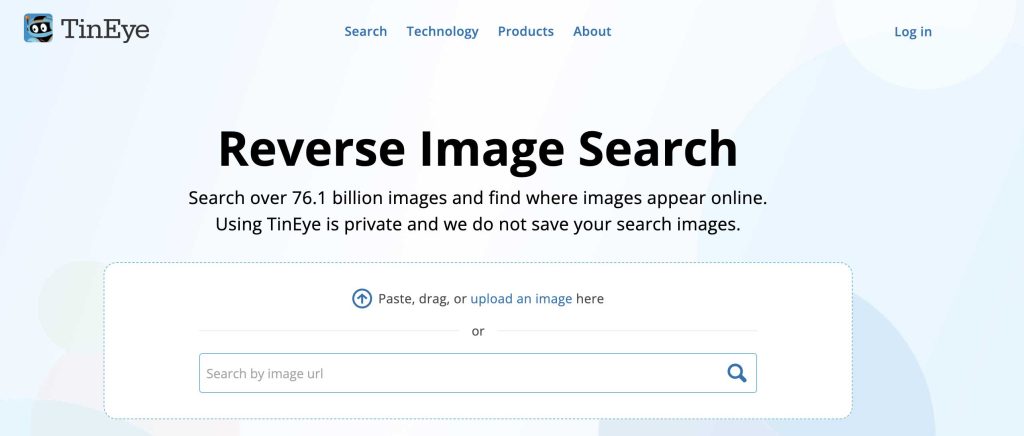
TinEye takes a different approach by focusing on similar image search without specific facial recognition. This solution is better suited for those wanting to find the origin of an image or verify its online use, without focusing on identifying people.
TinEye is available in a generous free version with affordable paid options for intensive users.
Here is a comparison of the main alternatives to PimEyes:
- Google Lens: Versatile image search, free
- FaceCheck.ID: Facial recognition, pricing similar to PimEyes
- TinEye: Image search without face focus, generous free version


