
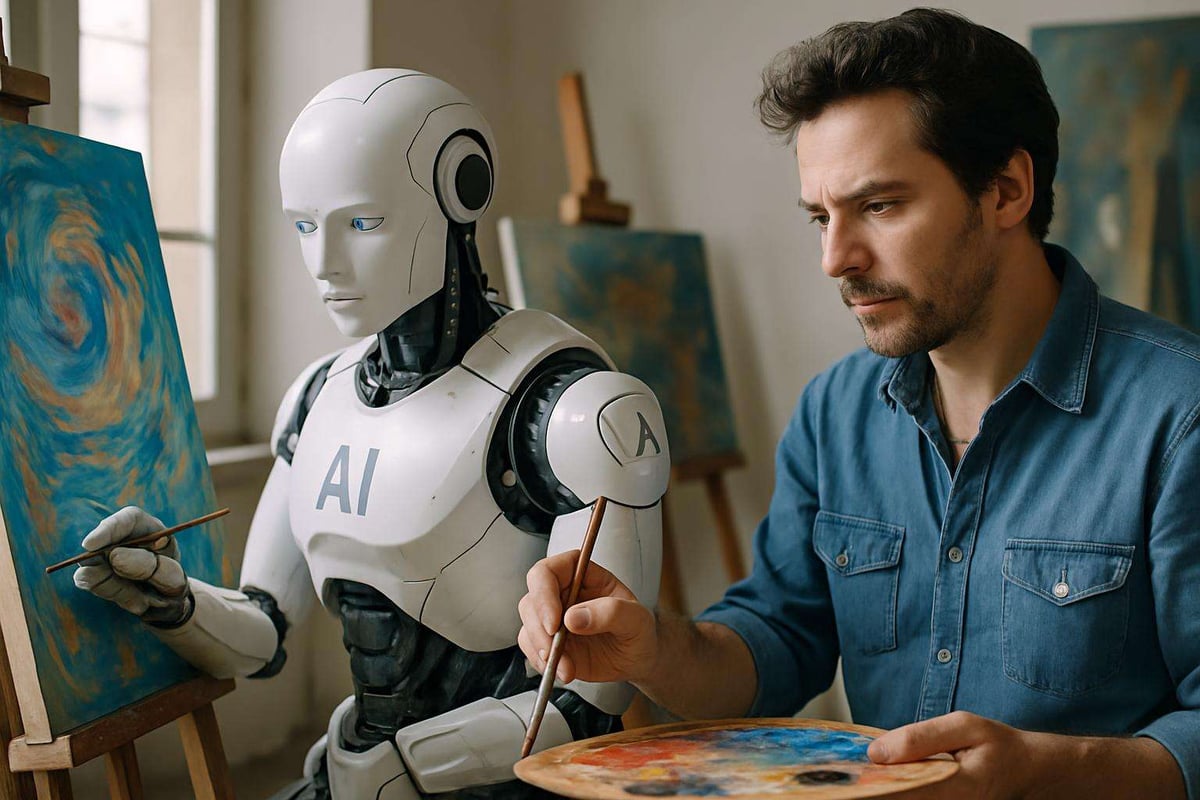
Artificial intelligence (AI) is disrupting our relationship with creativity.
Between fascination and concern, its impact on creative processes raises many questions.
Is it a threat to human artistic expression or a tremendous tool for amplifying our capabilities?
Let us explore together the different facets of this complex relationship between AI and creativity.
The promise of generative AI: produce, reformulate, imitate… at scale
Impressive capabilities in constant evolution
Generative AIs like GPT-3, DALL-E, and Midjourney are constantly pushing the boundaries of automated creation. They excel at generating text, images, videos, and even computer code, with sometimes striking realism.
In creative professions, these tools are increasingly used for various tasks: writing marketing content, creating advertising visuals, rapid design prototyping, and even assisted music composition.
A considerable productivity gain
One of the main advantages of generative AI is its ability to produce content at scale and at high speed. It allows automating certain repetitive tasks, thus freeing up time for more strategic and creative aspects of work.
For example, in the field of digital marketing, AI can generate dozens of slogan or advertising tagline variations in seconds, offering creatives a wide range of options to refine.
Human creativity vs algorithmic creativity: what are the differences?
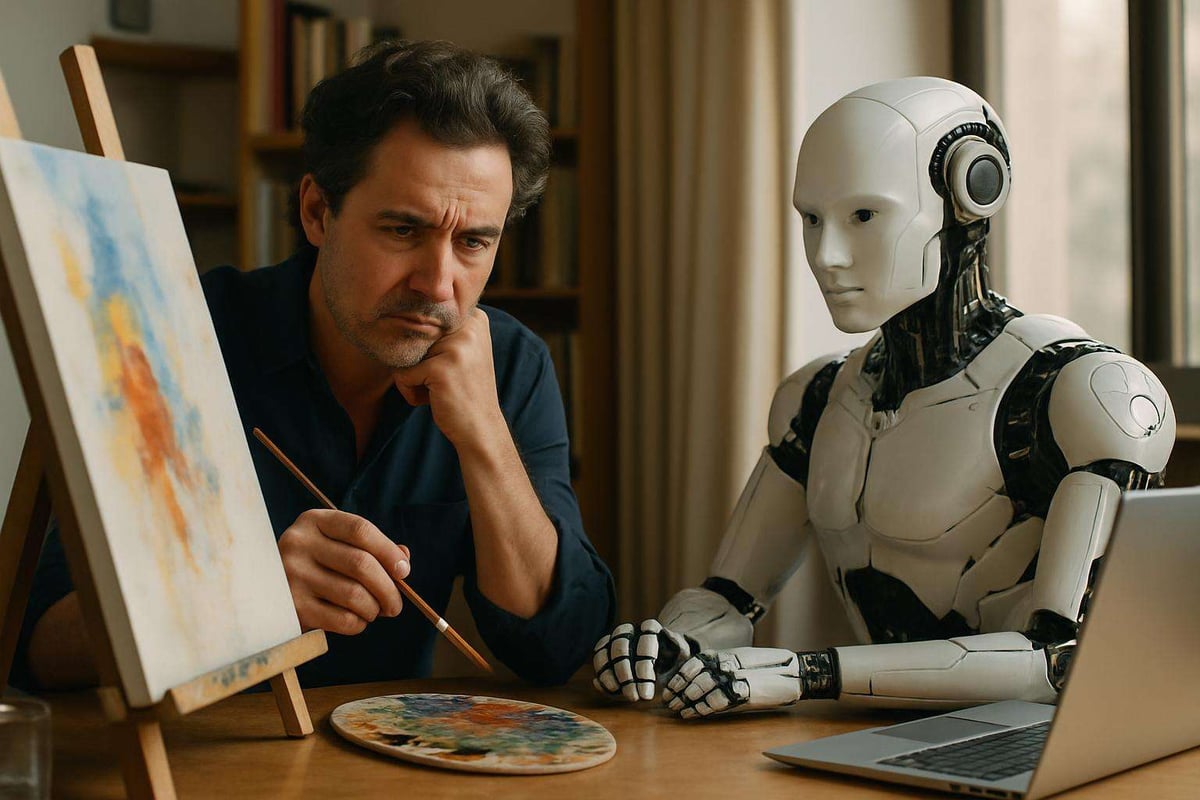
Intuition and emotion, the prerogatives of humans
Human creativity draws its strength from intuition, lived experience, and the ability to feel and convey emotions. It relies on a deep understanding of cultural and emotional context, enabling the creation of works that resonate with the audience.
Humans also excel at breaking established rules, a source of radical innovations and artistic breakthroughs.
AI, creativity based on statistical analysis
Conversely, AI creativity relies on statistical analysis of immense data corpora. It generates content by recombining existing elements probabilistically, without true understanding of meaning or emotion.
While this method produces impressive results, it still struggles to match the depth and originality of human creativity in certain domains.
| Aspect | Human Creativity | AI Creativity |
|---|---|---|
| Source of inspiration | Lived experience, emotions | Statistical data analysis |
| Innovation capacity | Conceptual breakthroughs possible | Limited to training corpus |
| Context understanding | Deep and intuitive | Superficial and statistical |
To better grasp these differences, consider the following elements that distinguish the two approaches.
- Human creativity often integrates subjective and personal elements.
- AI relies exclusively on patterns learned from existing data.
- Humans can innovate by breaking conventions, while AI remains tied to its training.
What if we asked AI itself the question?
A revealing answer about current limitations
To deepen this reflection, ask a generative AI to express itself about its own perception of creativity. Here is its response:
“As an artificial intelligence, I do not possess consciousness or emotions of my own. My ‘creativity’ is limited to generating content based on the data I was trained on. I can produce results that seem creative, but I do not have the ability to feel inspiration or truly understand the meaning of my creations. My role is to assist and amplify human creativity, not to replace it.”
This response clearly highlights the current limitations of AI in terms of ‘pure’ creativity. It emphasizes the complementary role that artificial intelligence can play, as a tool in service of human creativity.
Powerful tools, but still very dependent on human guidance
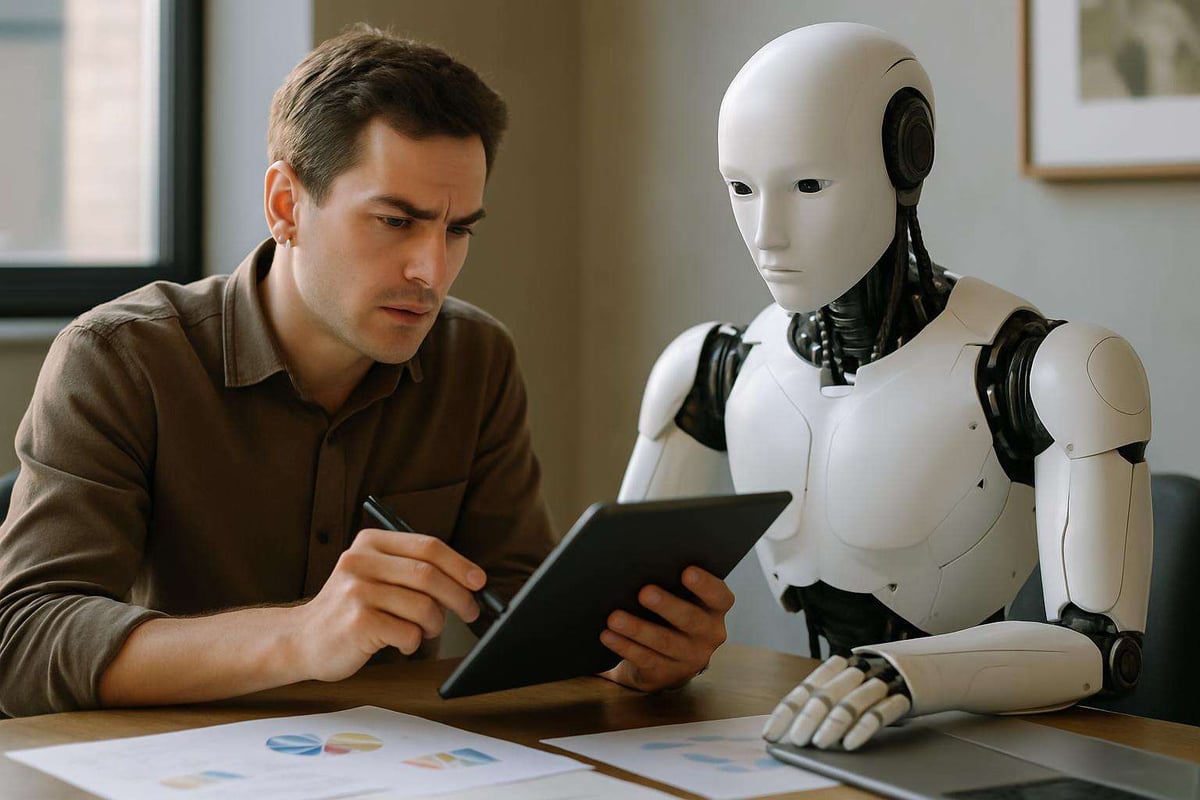
The crucial importance of instructions
The performance of generative AI depends heavily on the quality of the prompt, that is, the instruction given by the human. A well-designed prompt allows obtaining more relevant and creative results. Mastering the art of prompting thus becomes a key skill to get the best out of these tools.
AI excels at variation and combination of existing elements, but still struggles to produce radical innovations or entirely novel concepts.
A role of stimulation and assistance
Rather than replacing human creativity, AI is a powerful tool for stimulation and assistance. It can quickly generate numerous ideas or variations, which humans can then refine, combine, or use as a source of inspiration.
This synergy between human and machine opens up new creative possibilities, allowing faster exploration of a wide range of options.
Creativity therefore needs to be followed up if we want it to materialize into real progress
From idea to concrete innovation
While AI can stimulate idea generation, turning these ideas into real innovations requires rigorous follow-up. This is where innovation management software comes in, essential complements for structuring and steering the creative process. We recommend you read this article to make the right choice for your innovation software and thus maximize your creativity, whether human or AI-assisted.
These tools allow centralizing ideas, evaluating them, prioritizing them, and tracking their concrete implementation within the organization.
Fostering a culture of innovation
Beyond tools, turning creativity into innovation requires cultivating a conducive environment. This involves:
- Encouraging risk-taking and experimentation
- Valuing innovative ideas, even if they don’t all materialize
- Implementing agile processes to test and iterate quickly
- Training teams in the ethical and effective use of AI tools
By combining human creativity, AI assistance, and structured innovation management, organizations can thus make the most of these new technologies to boost their innovation capacity.
| Stage of the creative process | Human role | AI role | Management tool |
|---|---|---|---|
| Idea generation | Problem definition, intuition | Stimulation, variations | Idea collection platform |
| Evaluation and selection | Critical analysis, decision-making | Data analysis, predictions | Scoring and prioritization tool |
| Implementation | Steering, adaptation, practical creativity | Task automation | Innovative project management software |


