
ChatGPT 4, developed by OpenAI, has revolutionized the world of artificial intelligence with its impressive text generation capabilities.
However, its access is limited and paid. Fortunately, there are free alternatives that are just as effective.
These tools offer features similar to those of ChatGPT 4, allowing users to generate text, answer questions, and even create specialized content.
Let’s discover together 12 free alternatives that could meet your needs.
1. DeepSeek-R1
An AI that rivals ChatGPT

DeepSeek R1 is an AI developed by the Chinese company DeepSeek. The tool is free while having performance comparable to ChatGPT.
Its main features:
✔ Intelligent responses: Understands and answers questions in natural language.
✔ Advanced reasoning: DeepThink provides detailed answers by exposing its thought process step by step.
✔ Content generation: Can write articles, scripts, and summaries.
✔ Customization: Adapts the tone and style of text according to needs.
✔ Up-to-date information: Accesses online sources to provide updated answers. Otherwise, the knowledge base currently stops at July 2024.
What makes it unique:
- Energy efficiency: It was trained with fewer resources than other AIs, thus reducing costs and energy consumption.
- Independent development: It shows that a smaller company can compete with AI giants.
Points of concern:
⚠ Security and privacy: Some experts fear data use by the Chinese government.
⚠ Data sharing: Reports indicate that the application sends information to servers linked to ByteDance.
DeepSeek R1 is a performant and cost-effective alternative to other AI chatbots, but with outstanding questions about data protection.
2. Vibe by Mistral AI, formerly Le Chat
The French AI that responds quickly

Vibe, which Mistral AI called Le Chat until its rename, is a conversational assistant developed by Mistral AI, a French startup specializing in artificial intelligence. Vibe is designed to assist users with various tasks, ranging from text and image generation to computer programming.
It stands out for its speed, delivering responses up to 1,100 words per second, thirteen times faster than ChatGPT.
Main features:
- Content generation: Vibe can create text, images, and computer code, facilitating writing, visual creation, and software development.
- Specialized AI assistants: It offers intelligent assistants to optimize workflows, suited for both technical and non-technical users.
- Real-time information access: Thanks to its internet connection, Vibe provides updated information, ensuring accurate and relevant responses.
- Free image generation: Vibe integrates an image generation feature powered by the Flux Ultra model from Black Forest Labs, recognized for its ability to produce high-quality photorealistic images.
- Response speed: One of Vibe’s notable features is its exceptional speed. Thanks to the “Flash-Answers” feature, it can generate responses at a speed of over 1,000 words per second, surpassing competitors like ChatGPT.
3. ChatSonic
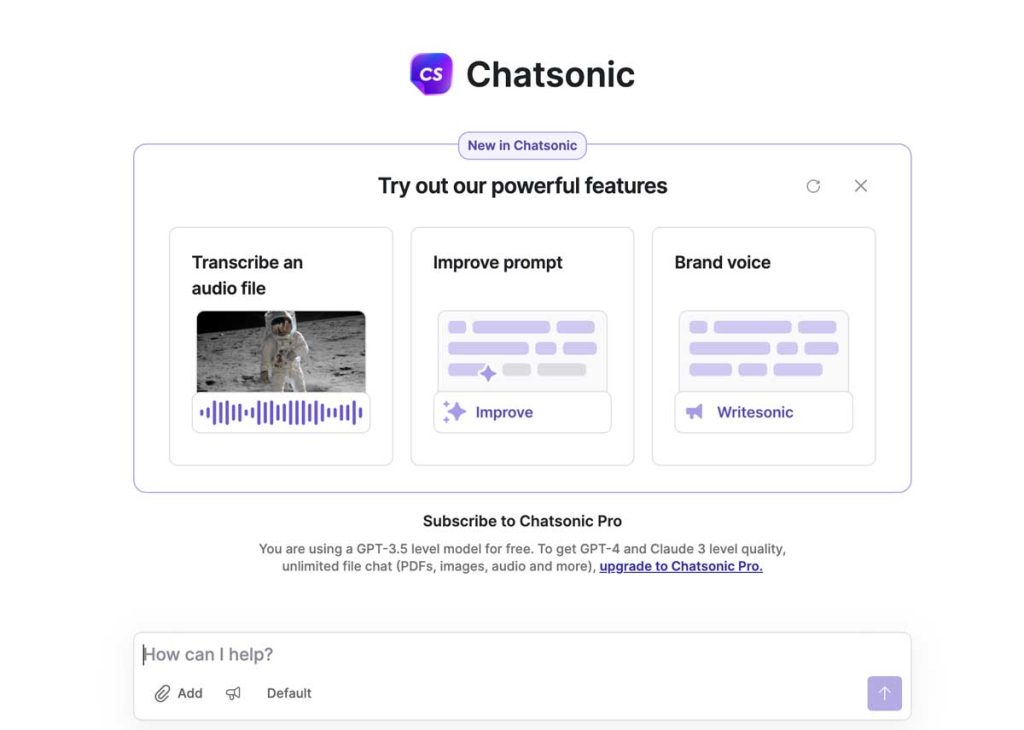
A free AI chatbot with advanced features
ChatSonic is an AI chatbot developed by Writesonic that offers an experience similar to ChatGPT 4, but for free. Thanks to its advanced features, it allows you to:
- Generate responses from natural language queries
- Create articles, scripts, and even translations
- Customize the tone and style of generated content
ChatSonic relies on data from Google Search, which allows it to provide up-to-date information.
Additionally, it is capable of generating images to illustrate its responses.
4. Anthropic Claude
A free language model focused on ethics and safety
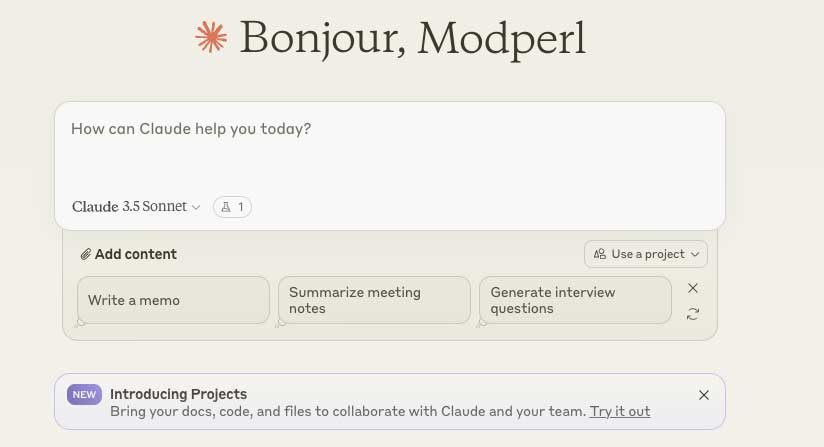
Anthropic, a startup specializing in AI, has developed Claude Sonnet 3.5, a free language model that emphasizes ethics and safety. Its main characteristics are:
- A “constitutional” training based on ethical principles
- Automatic refusal of malicious requests
- Clear and concise responses to user queries
Although Claude is still in the testing phase, it is a promising alternative for those looking for a reliable and responsible conversational AI.
5. YouChat
A free chatbot that cites its sources for more transparency
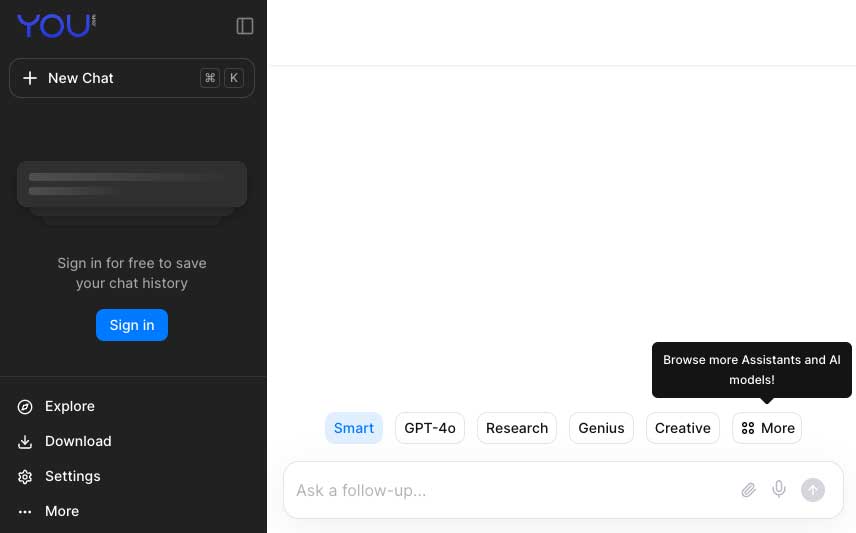
YouChat is a free chatbot that stands out for its transparency.
For each generated response, it displays the sources used, whether they are files or websites. This feature allows users to:
- Verify the reliability of the information provided
- Deepen their knowledge on a given topic
- Use YouChat as a research tool
Accessible online for free, YouChat is ideal for those looking to generate content while having access to information sources.
6. Bloom
A multilingual open-source language model
Bloom is an open-source language model developed by Hugging Face and BigScience. It stands out for its ability to process more than 46 languages, making it a versatile tool for users worldwide. Among its strengths:
- An architecture based on OpenAI’s GPT-3 model
- Performance comparable to commercial models
- An active community contributing to its continuous improvement
Thanks to its open-source nature, Bloom offers an accessible and transparent alternative to ChatGPT 4, while promoting linguistic diversity.
7. Luminai
A free platform offering several specialized language models
Luminai is a free platform that offers a series of specialized language models, adapted to different domains and tasks. Among the available models:
| Model | Specialty |
|---|---|
| MedicalGPT | Medical content generation |
| LegalGPT | Legal assistance |
| FinanceGPT | Financial analysis and report generation |
By using Luminai, professionals can benefit from AI assistance tailored to their industry, at no additional cost.
8. OpenAssistant
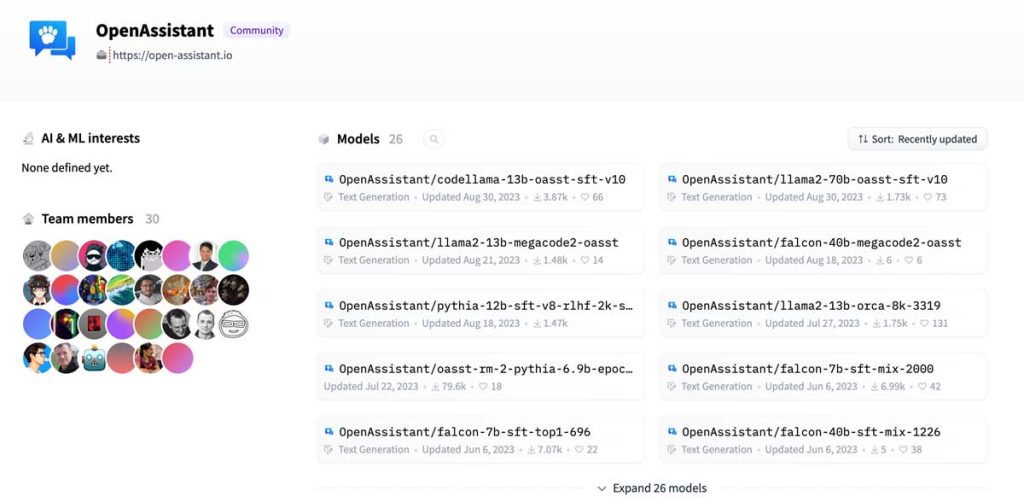
A free open-source chatbot trained collaboratively
OpenAssistant is a free open-source chatbot that differentiates itself through its collaborative training approach. Volunteers from around the world contribute to improving its performance by:
- Providing diverse training data
- Evaluating and refining generated responses
- Proposing new features and improvements
This community-driven approach allows OpenAssistant to continuously improve and adapt to user needs, while remaining freely accessible.
9. StableLM
A free open-source language model from Stability AI
StableLM is a language model developed by Stability AI, a company specializing in generative AI. This free open-source model offers performance comparable to ChatGPT 4, with additional advantages:
- An architecture optimized for fast and coherent text generation
- Multilingual capabilities covering more than 100 languages
- Easy integration into third-party applications through its API
StableLM is a good choice for developers and businesses looking to integrate a performant conversational AI into their projects, at no additional cost.
10. PaLM
A free open-source language model from Google focused on reasoning
PaLM (Pathways Language Model) is a language model developed by Google, which differentiates itself through its advanced reasoning capabilities. Thanks to its innovative architecture, PaLM is capable of:
- Solving complex problems requiring multi-step logic
- Generating detailed and coherent explanations
- Adapting to new contexts and tasks with few examples
As a free open-source model, PaLM offers researchers and developers the opportunity to explore new AI applications, with an emphasis on reasoning and problem-solving.
11. WizardLM
A free open-source language model trained on in-depth knowledge
WizardLM is a language model developed by Anthropic, which stands out for its vast knowledge base. Trained on a wide variety of sources, from scientific works to literary works, WizardLM offers:
- Detailed and informative answers on many topics
- The ability to generate creative content, such as stories or poems
- A user-friendly interface allowing natural interaction
Thanks to its free access and open-source nature, WizardLM is a very useful tool for students, researchers, and knowledge enthusiasts looking to explore new horizons.
12. Gemini
Google’s AI assistant
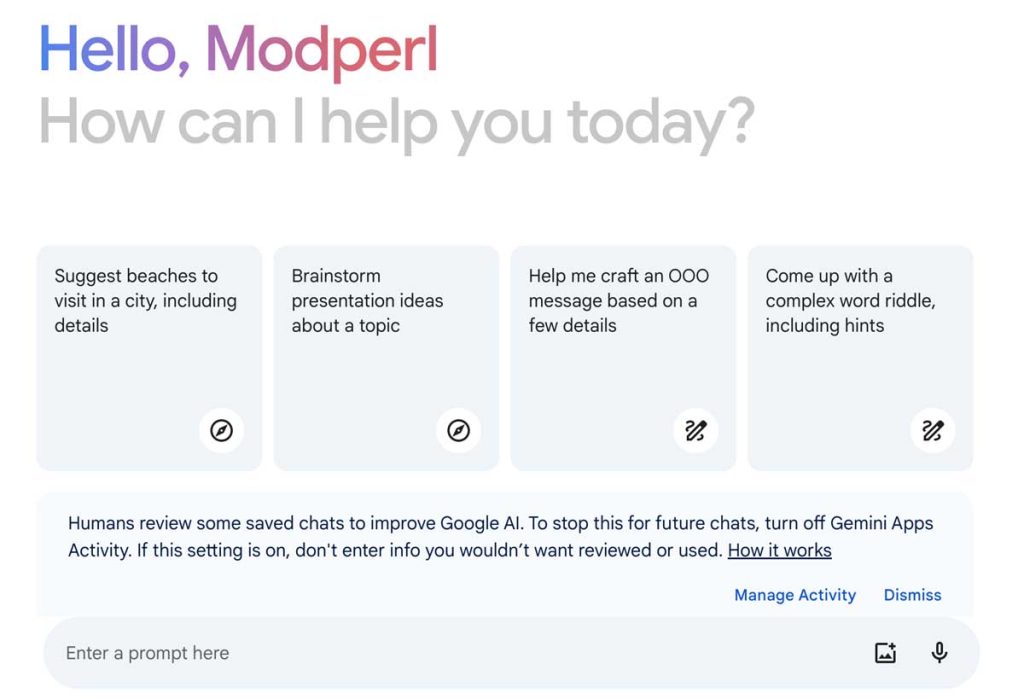
Google Bard, also known as Gemini, is the AI assistant developed by Google to compete with ChatGPT 4. Unlike its rival, Bard offers:
| Feature | Advantage |
|---|---|
| Web access via Google Search | Up-to-date information without time limitations |
| Integration with Google Lens | Image analysis and generation of associated information |
| Code export to Google Colab | Ease of use for developers |
Additionally, Bard allows voice input for queries and response editing, features absent from the free version of ChatGPT. With its close integration into the Google ecosystem, Bard positions itself as a powerful and versatile alternative.
Whether you are a developer, researcher, student, or simply curious, these tools will allow you to generate content, acquire new knowledge, and explore the frontiers of artificial intelligence, at no additional cost.


